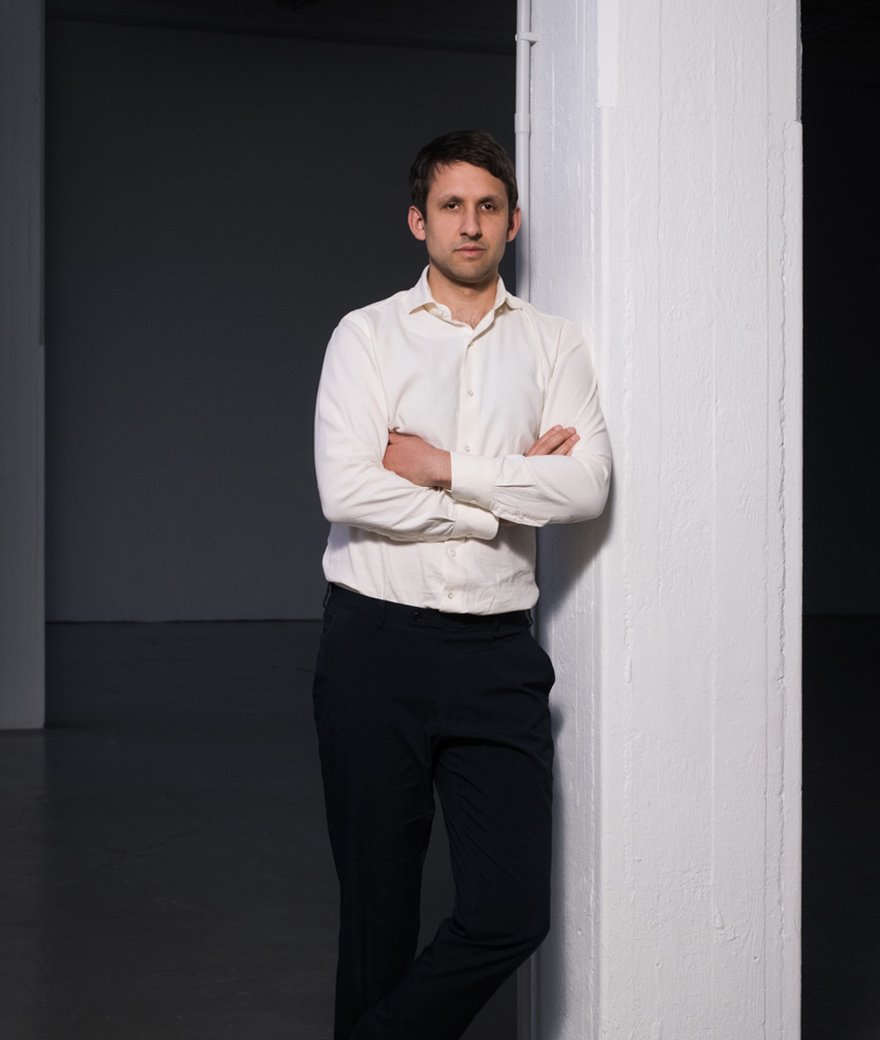
A talk with Dan Thawley
From 6 to 9 March 2026, MATTER and SHAPE returns to the Jardin des Tuileries in Paris. Directed by Matthieu Pinet with creative direction by Dan Thawley, the design salon reaches its third edition, reaffirming its position as one of the leading international events dedicated to contemporary design, bringing together industry, decorative arts, design practice, and new authorial approaches.
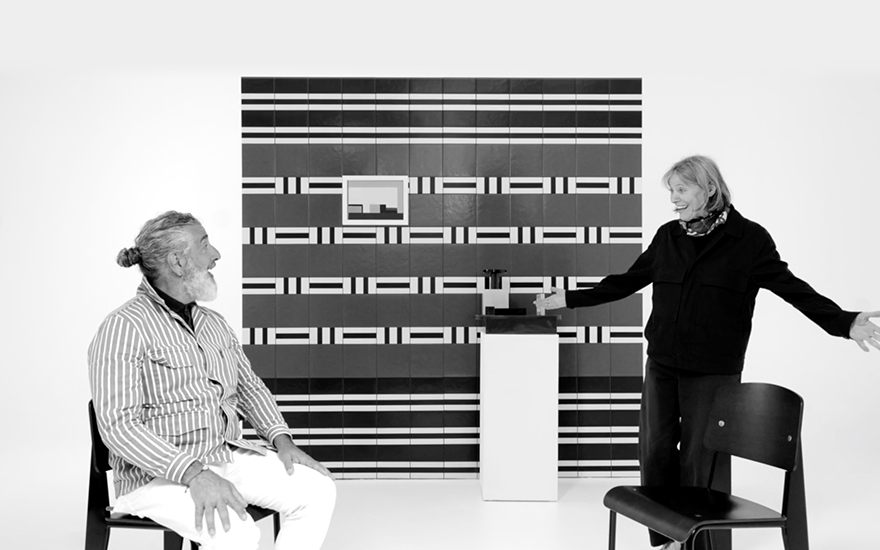
Within this context, Mutina takes part through a dialogue with Ronan Bouroullec. The new collections exhibited – Aria, Adagio Outdoor, and Motivo – show the evolution of a long-standing collaboration with the designer, based on a shared vision of ceramics as an expressive language, interweaving research, beauty, poetry, and material.
In this interview, Dan Thawley discusses the curatorial vision behind MATTER and SHAPE, reflecting on the meaning of materiality today and on the role of ceramics in the contemporary debate.
Your career began in fashion publishing and gradually expanded into architecture, design and contemporary art. How does this cross-disciplinary background influence the way you write, design and conceive a space today?
I’ve always been a keen reader, and I’ve long admired writers and journalists who can draw references from across culture when writing about music, fashion or art. That sense of historical and geographical context is essential: nothing exists in a vacuum.
Especially in today’s very post-post-post-modern creative landscape—where one might argue everything has been done before—it becomes crucial to situate objects, critical positions and even one’s own work within a lineage. To understand where something sits, within a belief system, within society, gives it clarity.
I’ve been fortunate to meet and be mentored by people who possess that rounded awareness of themselves and of the world around them. For me, it began with a creative family, and later with fashion designers who went far beyond making clothes: they were world-builders. Their garments existed in dialogue with interiors, with art collections, music and even rituals of eating and drinking. That cross-disciplinary dimension is fundamental to thinking critically about beauty.
After many years at the helm of A Magazine Curated By and numerous international collaborations, how has your relationship with curating evolved? What challenges does it face today?
Firstly, the word ‘curation’ is often misused to mean nothing more than selecting or compiling. True curation requires deep knowledge of a subject and the construction of a narrative—an articulated reason why certain elements should coexist in a space or project.
In the design world today, contextualised environments are essential. That approach extends to MATTER and SHAPE as a salon. An environment engages all five senses. While we cannot control every exhibitor, we can provide the framework for a broader conversation.
We exist within a specific ecosystem: during Paris Fashion Week, near major museums such as the Fondation Cartier and within the grounds of the Musée du Louvre. Institutions such as the Bourse de Commerce form part of this wider cultural dialogue. All of this informs our thinking.
Curating today involves navigating brands, young designers, institutions and luxury groups. Connecting the dots without losing coherence.
As an editor, I used to condense a three-dimensional world into a two-dimensional publication. Later, I reversed that process, translating ideas into spatial experiences.
Curation is also pedagogical: it requires clarity. The arts can sometimes rely on assumed knowledge, but I believe in offering audiences the keys to understanding. Passion, perfume, celebrity: these can all be entry points.
Working with important institutions such as the Charlotte Perriand Estate and collaborating with figures like Madhavi has allowed me to synthesise diverse practices into the vision of MATTER and SHAPE. It has also reinforced my commitment to supporting emerging talent and to recognising that many creatives shift disciplines over time. That fluidity between fashion, design and art is very real.
MATTER and SHAPE defines itself as a “design salon”—a hybrid format between a fair, a cultural platform and a social occasion. What was your vision in shaping its identity and distinguishing it from other international events?
MATTER and SHAPE began from left field. Our director, Matthieu Pinet, originally conceived it as a digital platform—a long-term project that later evolved into a physical event.
My background in fashion and luxury offered insight into how immersive experiences are constructed. We wanted to synthesise that knowledge while carving out a new space in Paris.
Many established fairs uphold important traditions, but few provide a platform for contemporary international brands and family-run companies operating outside the gallery model. The gallery system has its value—but it is not the only viable structure for producing quality design.
MATTER and SHAPE also responds to the migration of fashion houses to Salone del Mobile in Milan. We asked ourselves: why not bring design to Paris during Fashion Week? Salone is extraordinary but saturated. Paris in early spring offers a different rhythm—a moment of emergence. The audience present for Fashion Week forms a fertile ecosystem for design. It felt timely to create a platform that engages that intersection.
The name MATTER and SHAPE foregrounds the dialogue between materiality and form. What interests you most in this relationship today? And what potential does ceramic hold within that framework?
Ceramic is one of the most primal building blocks of architecture—shaped by human hands for millennia. It embodies something elemental: earth transformed through heat and touch.
Its versatility is extraordinary. Matte and gloss, colour, texture, reproducibility… It can be artisanal or industrial, intimate or monumental. In a time when extractive materials are under scrutiny, ceramics remain tangible and traceable.
We have presented innovative and sustainable materials—mushroom-based fabrics, reconstituted marble—but ceramic continues to resonate strongly within the current cultural mood. There is a return to tactility, to meditative craft.
Mutina approaches ceramics as a cultural material before a technical one, inviting internationally renowned designers and artists to reinterpret it in radical ways. From your perspective, what makes ceramics such a relevant medium in today’s contemporary debate? How important is authorship within an increasingly homogenised system?
Brands such as Mutina demonstrate how ceramics can transcend functionality, entering institutional contexts such as the Centre Pompidou. Seeing works by Ronan Bouroullec presented there shortly after our first edition was particularly meaningful.
Authorship remains crucial, but it must also evolve. It has often been hierarchical and privileged. Increasingly, I’m interested in recognising collective contribution.
Fashion offers a useful parallel. Social media has revealed the many hands behind a couture show. While figures such as Miuccia Prada remain central, greater transparency exists. Similarly in design, fabrication and craft communities deserve recognition. Traceability should become part of the cultural norm. Authorship can be shared without diminishing vision.
What strikes you most about Mutina? How does it position itself within the context of MATTER and SHAPE?
I’ve been in Milan on the occasion of Design Week 2025 and I had the chance to see the photographic collaboration with Brigitte Niedermair. Her precise and geometric gaze, so attuned to perspective and shadow, brought a contemporary intensity to the representation of interiors. It felt almost like stepping into a metaphysical piazza.
This notion of scale is central to MATTER and SHAPE 2026. We are interrogating categories—limited edition, industrial, artisanal, collectible—labels that often overlap. Mutina embodies this fluidity, operating between industrial tile production and author-led editions.
Within the installation, ceramics function both as surface and object. The dialogue between fixed and movable elements, interior and exterior, echoes the pavilion’s own condition—a temporary structure within a garden, permeated by light.
There is also a Mediterranean warmth—an Italian sensibility in dialogue with a French designer such as Ronan Bouroullec. It feels both grounded and suspended, like a terrace. We are delighted to host it in Paris.