A talk with Nicholas Fox Weber
Homage to the Square began with an encounter between two ways of thinking about colour. On one side, Josef Albers’ lifelong investigation into its instability, relativity, and extraordinary ability to alter perception. On the other, Mutina’s research into ceramics as an architectural and expressive language, where colour is inseparable from material, surface, and light.
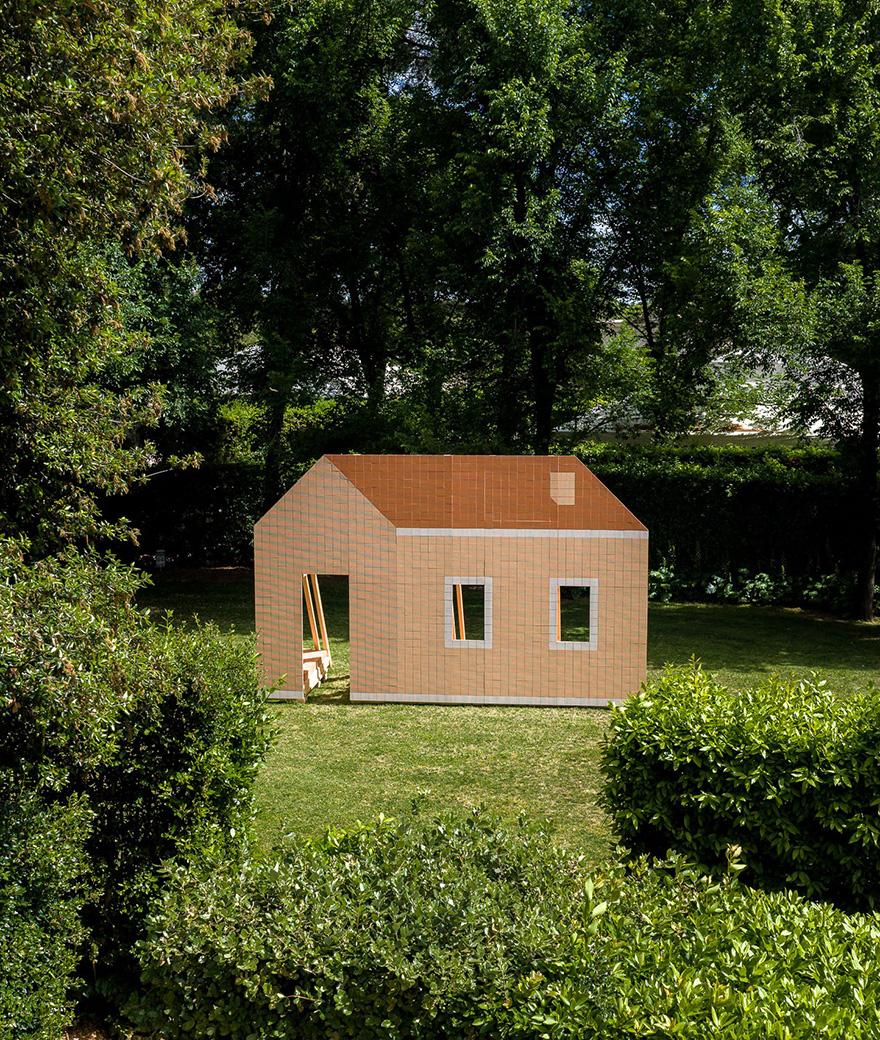
Developed in collaboration with The Josef & Anni Albers Foundation, Homage to the Square opens a new dialogue between Mutina and the art world, giving shape to its first collection created in partnership with an art foundation. Rather than simply reproducing Albers’ work, the project translates his research into a new material dimension, bringing one of the twentieth century’s most influential explorations of colour into the realm of contemporary architecture and design.
The encounter feels particularly meaningful in light of Albers’ own practice. Trained in craftsmanship from an early age and later immersed in the experimental workshops of the Bauhaus, he understood materials not simply as vehicles for ideas, but as active participants in the way we see and experience them.
As Nicholas Fox Weber, Executive Director of The Josef & Anni Albers Foundation, explains, Albers was constantly searching for new ways to present colour and remained an “adventurer” throughout his life. We spoke with him about the ideas behind the collaboration, Albers’ enduring fascination with perception and experimentation, and what happens when Homage to the Square enters the world of ceramics.
Homage to the Square is among Josef Albers’ most iconic and influential bodies of work. What did it mean for the Josef & Anni Albers Foundation to see this series translated into a material and architectural dimension through the collaboration with Mutina?
Josef thought of the Homages as “platters to serve color.” The Mutina tiles present color in a new way, through a different material with a very special texture. This means that the colors meet each other and interact differently than ever before.
Josef Albers often described color as something “almost never seen as it really is.” In your view, how does ceramics–with its texture, depth, and interaction with light–open new possibilities for experiencing his ideas today?
The sheen is different, and the quality of light is new in Josef’s work. So the way that color deceives us is realized in a pioneering way.
The project moves beyond reproduction and enters the realm of interpretation. What aspects of Albers’ practice and philosophy did you feel were essential to preserve in this dialogue with Mutina?
Josef was always looking for new approaches to the presentation of color. He was an adventurer, very aware of the role of different materials, as he had been ever since his father trained him in a handicraft tradition, and later when he became involved with the various workshops at the Bauhaus.
Both Josef and Anni Albers believed deeply in the relationship between art, craft, and everyday life. Do you see Homage to the Square with Mutina as continuing that legacy in a contemporary way?
Yes, it does continue that legacy in a way that is entirely up-to-date, reflective of new technology and unprecedented possibilities of manufacturing. This is the sort of moving forward into new realms that was dear to Josef.
Color perception changes depending on context, scale, and proximity. How important was it that this collaboration could be experienced not only as an object, but as a spatial and immersive environment?
This is extremely important. With the tiles, one can be surrounded by Josef’s alchemic events.
The Bauhaus spirit was rooted in experimentation across disciplines. What relevance do you think that approach still has today, particularly in the worlds of design and architecture?
That relevance is evident in everything from smartphones to building facades. The possibilities for new experimentation are infinite.
Mutina has always approached ceramics through a cultural and artistic lens rather than a purely industrial one. What made this partnership feel especially aligned with the values of the Foundation?
The Foundation seeks to advance “the revelation and evocation of vision” in unprecedented ways. Mutina is immersed in both tradition and modernity, as is the Albers Foundation in all of its projects.
Looking at the response to the project so far, what do you hope designers, architects, and audiences will ultimately take away from this encounter with Josef Albers’ work?
I think they will feel a sense of excitement and revelation – in fact, I am certain they will. Their imagination will be fired up: always a wonderful thing.